
A Design Celebration Rooted in Practice
On December 17, 2025, designers from architecture, interior design, MEP engineering, and the broader industry gathered for an exchange platform that brought diverse professional roles back to the core of design and practice.
Through the convergence of project presentations, jury perspectives, and first-hand practical experience, the event fostered in-depth discussions on workflows, design thinking, and cross-disciplinary integration.
BIM × AI is not merely a set of tools, but a shared language that connects design, construction, and future development—signaling the industry’s gradual shift toward more mature and collaborative modes of practice.


AI × BIM: Designing the Next Era
This professional publication is structured around AI × BIM as its core framework, approaching digital tools from the perspective of design practice to rearticulate their roles within architecture and interior design. Centered on the concept of “building the structural framework with data and driving the soul through computation,” the book explores how AI and BIM simultaneously respond to both the rational structure and the intuitive judgment inherent in design.
The content provides a comprehensive overview of the development of AI × BIM, with a particular focus on the practical application of inferential design. Rather than limiting AI to image generation, the book guides designers toward a data-driven mode of thinking, positioning AI as a secondary cognitive engine that supports design decision-making and process evaluation. Covering integrated AI × BIM workflows, data-chain construction, and real-world case studies, the ultimate goal is to translate technology into actionable methods that can be directly applied within professional projects.
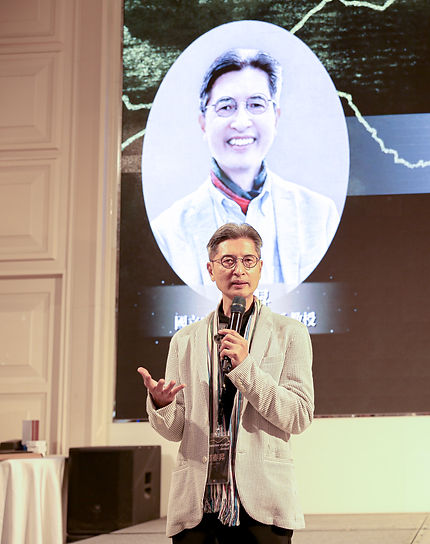
Judges' comments
The crucial moment of moving from tool application to design judgment
The jury unanimously noted that this year’s submissions have clearly moved beyond the question of whether BIM can be used, and instead demonstrate a mature understanding of information structure, classification logic, and integrated design thinking. In many projects, information flows consistently throughout the entire design process, forming a solid foundation that supports subsequent decision-making and design development.
The jury further emphasized that with the integration of BIM and AI technologies, designers are increasingly able to focus on spatial thinking and design judgment, rather than being constrained by technical operations. Over the next decade, design competitiveness will be defined by the ability to integrate technology, data, aesthetics, and cross-disciplinary communication.
This event is therefore not merely an evaluation of projects, but an important dialogue pointing toward the future of collaborative workflows and the evolving role of designers.
Popularity Award
HSIEH YU HSIANG Winning Interior Renovation
Liaoning Road toy store
 |  |  |
|---|---|---|
 |  |  |
Honorable Project | Excellence Award
Both projects demonstrate solid and mature proficiency in Revit, effectively integrating model data with drawing documentation. The design narratives are clear and logically consistent, with comprehensive presentations across plans, elevations, and detailed drawings. From information structuring to visual representation, the works maintain a high professional standard, clearly reflecting strong technical training and practical experience, and achieving a level of completeness that can be directly applied to real-world projects.
YI-TANG, KAO / WEI-TING, TSAO
FAR EAST CONSTRUCTION CO.,LTD
OFFICE NO.32


CHAO,SZU-CHIA
J-type Design
Zhang's House In Taipei


Honorable Protect |
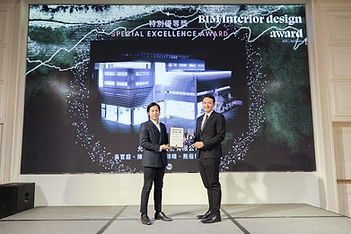
Special Excellence Award
Kungting Wu / Yenhsiung Chen / Shihching Peng / Suyi Hsiung / Yiting Tsai
ONEVER
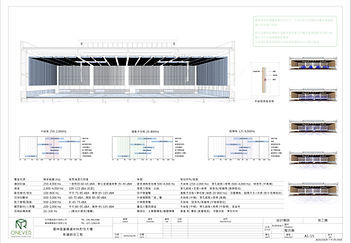
Yunlin Materials Storage Building Project
The project demonstrates an outstanding breadth of BIM application, with a well-structured framework, clear information organization, and strong practical value for real-world implementation.
At the award ceremony, Mr. Wu Kuan-Ting, General Manager of ONEVER, also shared insights into the application trends of BIM in the construction industry. From construction coordination and quantity control to workflow management, he illustrated how BIM has become a critical driver for improving efficiency and quality on construction sites.





Professional Talk | Architect Yi-Feng Chen
Efficient Integration of Architecture and Interior Design
Architect Yi-Feng Chen centered her presentation on the comprehensive use of BIM Revit, demonstrating how architectural design, building permit drawings, and interior design can be fully integrated within a single workflow. By generating plans, sections, and various schedules directly from the model, dimensions, annotations, regulatory checks, and area calculations are updated synchronously, effectively reducing repetitive tasks and human error.
She also highlighted Revit’s strengths in area verification, door and window schedules, index tables, and structural beam-column coordination. This integrated approach enables earlier design validation, more precise communication, and a balanced optimization of both efficiency and quality—clearly illustrating the practical value of BIM in integrated design workflows.
Honored Project | Bronze Award
Yuchieh Chiu JCPC Design
Circle of Hope
The project demonstrates a high level of maturity in both design presentation and technical integration. Its overall structure is clear, with precise information delivery, achieving a strong balance between visual refinement and practical feasibility.
Award winner, designer Yuchieh Chiu, centered her sharing on the concept of “synchronized data integration,” contrasting traditional workflows with BIM-based processes. She explained how a model-driven approach enables single-point modifications with drawing-wide synchronization, significantly reducing the risks of omissions and rework.
Through real project examples, she further illustrated the advantages of BIM in documentation systems, MEP coordination, and modular construction, ultimately proposing a design ecosystem that is manageable, repeatable, and scalable—delivering long-term and stable benefits to design workflows.


Intermission Networking |
Authentic Dialogue Among Designers
During the intermission, conversations unfolded naturally and spontaneously. Some participants gathered to discuss model logic and drawing integration details, others shared their hands-on experiences of implementing BIM, while some spoke candidly about the challenges and transitional moments within their current projects. These open, unstructured exchanges allowed design experience to circulate organically throughout the space.


 |  |  |
|---|---|---|
 |  |  |
 |
Materials and Technology in Practice
The venue also served as a platform for direct exchange between designers and industry partners.
From flooring, aluminum doors and windows, tiles, water heaters, bathroom and kitchen systems, furniture, to audiovisual and information systems, sponsoring partners presented their solutions through physical displays and on-site explanations. This enabled designers to directly relate BIM models to real material properties, discuss implementation details and application possibilities, and move technical and material considerations beyond the limitations of catalogs.
A Moment of Industry Convergence
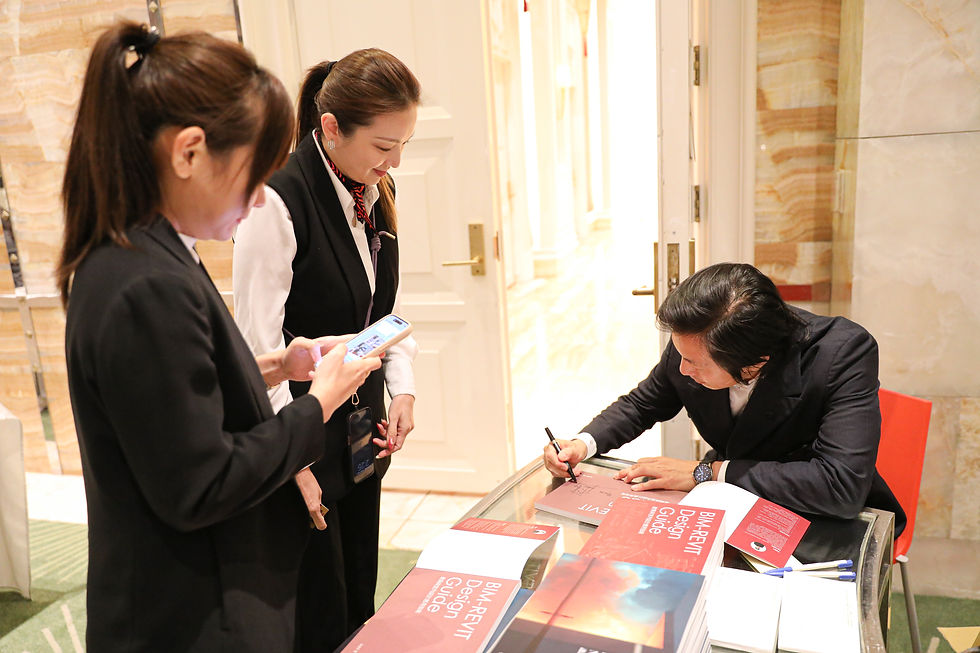
iecosyst served as the official host of this event, continuing its long-standing support for the application of BIM within the interior design field, while also sharing and promoting related publications on site.
As academic education, professional practice, and media outreach converged, the industry responded in parallel to the real needs of the design field. Designers, industry partners, and media representatives came together in this moment, transforming the intermission from a simple break into a meaningful juncture for connecting perspectives, integrating resources, and cultivating future collaborations.




Professional Talk|Chao-Hsuan Wang, MEP Engineer
The Ongoing Development of BIM-Revit in MEP Practice
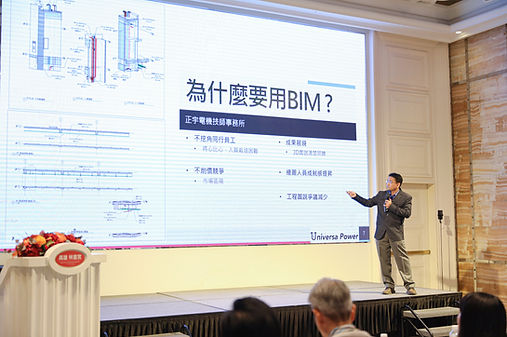
From an MEP practice perspective, Engineer Chao-Hsuan Wang provided an in-depth analysis of the long-term value of BIM in public infrastructure projects and MEP systems. He emphasized that the driving force behind BIM adoption lies not merely in the tools themselves, but in the comprehensive coordination of “people, tasks, locations, time, and assets,” encompassing real-world challenges such as cross-disciplinary communication, routing coordination, scheduling transitions, and model accessibility.
He further outlined BIM operational guidelines for public projects, highlighting that BIM is no longer solely a design tool, but an interface for operations management and a foundational data repository. Only by integrating facility operation and monitoring systems can BIM truly deliver its long-term value.
Honored Project | Silver Award
SU,TZU-CHI Nanolucky
XING,YA-YAN
The project demonstrates a mature and stable Revit workflow logic, achieving a strong balance between speed and accuracy in design decision-making, and earning high recognition from the jury.
Designer Tzu-Chi Su shared how Revit was used to synchronously integrate modeling, construction documentation, and quantity takeoffs, establishing clear work-item classifications and project parameters. This approach enables design, budgeting, and pricing to be effectively managed within a single system. Through item filtering, trade mapping, and the creation of external families, the workflow not only improves drawing production and cost estimation efficiency, but also provides a stable and scalable foundation for ongoing project optimization and cost control.


Professional Talk|Shih-Lun Yen, Design Director
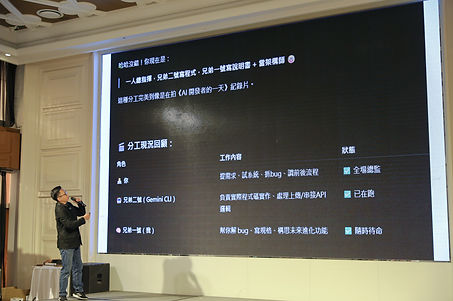
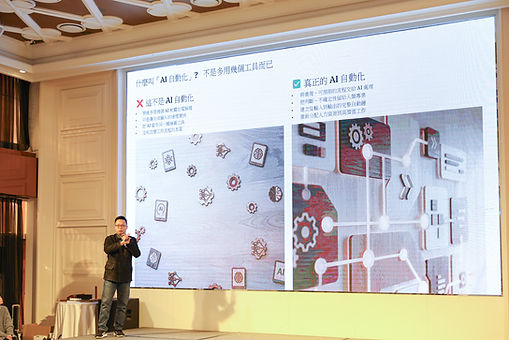
AI Automation Today: From Drawing Tools to Workflow Transformation
Design Director Shih-Lun Yen noted that the interior design industry is currently facing multiple pressures, including increasing project volumes, compressed timelines, and declining profit margins. In this context, AI is no longer merely a drafting aid, but a critical force reshaping design workflows.
The real question, he emphasized, is no longer whether to use AI, but how to delegate predictable and process-driven tasks to AI, allowing designers to return to roles centered on judgment, communication, and strategic thinking. He also clearly outlined the stages of AI’s evolution, underscoring that trust-building, contextual understanding, engineering risk assessment, and aesthetic decision-making remain irreplaceable human responsibilities.
AI carries no responsibility of its own; ultimate professional judgment and accountability will always rest with human designers.
Honored Project | Gold Award
CHOU TZU-YU Dial Interior Design
1617
The project demonstrates the designer’s outstanding achievements in design integration, depth of BIM application, and project management. From modeling to communication, the work consistently maintains a high level of quality and coherence.
Designer Tzu-Yu Chou shared her practical experience in fully implementing BIM, establishing drawing documentation based on construction logic to clearly define construction sequences, elevation controls, and material characteristics. This approach allows design accuracy and overall completeness to be continuously reviewed and verified. By integrating existing resources with a scalable and reusable documentation system, the workflow not only shortens the production time for plans, elevations, and perspectives, but also increases the reusability of detailed drawings—enabling design thinking to respond efficiently while supporting a sustainable, long-term design process.


High-Value Voucher Giveaway
Professional Support and Encouragement
This year’s giveaway was generously sponsored by MEP specialist Mr. Wei-Yan Chang, who contributed high-value vouchers in support of the event. Mr. Chang has long been dedicated to promoting the practical application of BIM within MEP and engineering practice, with the goal of making BIM a truly usable working methodology for a broader range of design and engineering professionals.
Through this sponsorship, he sought to offer tangible support for the continued growth of Taiwan’s design and engineering industries, adding a warm gesture of professional encouragement and mutual support to the event.
Brand Bonus Giveaway
The Healing Aesthetics of Flame
We extend our sincere appreciation to Mr. Ho-Chen Wu, Chairman of Dong Yong Water Heaters, for his generous bonus sponsorship, bringing a limited-edition giveaway featuring Lovinflame’s new flame aesthetics. Designed with safety, cleanliness, and a smokeless, odor-free flame, Lovinflame offers moments of calm and healing amid busy daily life.
Chairman Wu has long followed the development of BIM and, through this gesture, hopes to contribute positive energy to the industry. He also shared his observations on BIM promotion and industry development during the event, adding depth and perspective to the discussion.


BIM Interior Design Project Showcase + AI × BIM Applied Technology Lecture
What we have completed is not merely an award ceremony and a series of lectures, but a period of in-depth exchange dedicated to Taiwan’s interior design × BIM × AI community. Design, construction, MEP, and AI engaged in dialogue within a shared logic—fostering mutual understanding across disciplines, respecting methodologies, and enabling experience to be clearly transmitted and accumulated.
We extend our sincere gratitude to all jury members and speakers for providing professional perspectives that help guide the industry forward, and to every award recipient who committed to delivering work that is complete, rigorous, and open to scrutiny. You have demonstrated that BIM is not simply a tool, but a professional capability that can be sustained, trusted, and built upon.
Our heartfelt thanks also go to all participants, as well as our co-organizers, media partners, and sponsors, for their support and dedication. Because of you, this platform for Taiwan’s interior design × BIM × AI community was made possible and continues to shine. We will carry this trust and momentum forward, and remain committed to nurturing and advancing this shared endeavor with care and purpose.
Organizer::TYarchistudioBIM
Co-organizers:TnAID 、Taiwan BIM Alliance
Media Partners:i ECOSYST、InCG Media
Sponsors:Johnson Hardwood、Tong An Aluminum Windows、 Dyhot、San Shi Tang Tile、HONGGEK、Universa Power、Wei-Yan Chang, BIM MEP Specialist、WebIM Services、Der Yueh Audio-Visual Systems、UB Office Furniture、ELIZ Group、DILI Optoelectronics Technology、Bonze Boutique
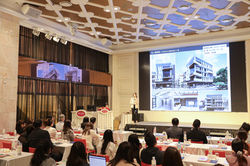 photo-207 |  photo-348 |  photo-199 |
|---|---|---|
 photo-230 |  photo-105 |  photo-315 |
 BIM interior design award展示架(易拉展)編輯製作 (Youtube 縮圖) |  photo-246 |  photo-201-1 |
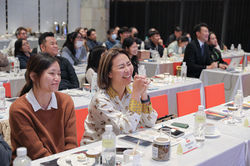 photo-336 |  photo-104 |  photo-357 |
 photo-400 |  photo-290 |  photo-327 |
 photo-155 |  photo-150 |  photo-111 |